


Why Spreadsheets Can’t Handle High-Volume Routing
Spreadsheets were never designed for complex, geographic decision-making. They work for small lists or basic capacity planning, but they collapse under the weight of thousands of stops, dependencies, and constraints. Every manual update increases the risk of human error, and static tables can’t account for real-world changes like traffic, delays, or shifting priorities. As route volumes increase, planners spend more time troubleshooting formulas than optimizing routes. This leads to inefficiencies, inconsistent performance, and a planning process that simply doesn’t scale.


Pro Tip: Pair large-scale routing with real-time tracking for even stronger performance. When planners can see where each driver is and how routes progress throughout the day, they can intervene early and keep operations running smoothly.
Endless Sorting and Filtering Slow Everything Down
Teams often spend hours sorting stops by ZIP code, city, or territory just to create a basic sense of order. Even then, the result rarely reflects the most efficient geographic sequence. As spreadsheets grow larger, filters break, rows misalign, and simple mistakes get buried. This creates a fragile system where one small change can derail an entire day of planning. The time spent reorganizing data becomes a hidden cost that erodes productivity.

No Built-In Geographic Intelligence
Spreadsheets don’t understand distance, travel time, traffic, or terrain — all essential components of efficient routing. Planners must approximate sequences manually, often relying on guesswork or basic map lookups. This leads to unrealistic routes, excessive mileage, and uneven workloads. Without geographic intelligence, spreadsheets treat every stop the same, ignoring the real-world conditions that affect routing accuracy.

Manual Routing Doesn’t Scale
Relying on dispatchers to manually sequence thousands of stops is not only slow but nearly impossible to do accurately. Human judgment breaks down under large volumes, especially when routing needs to factor in priorities, technician skills, delivery windows, or vehicle capacities. Even minor errors can throw off entire routes and cause delays. As workload grows, manual routing becomes a bottleneck that limits operational performance.

Automated Sequencing Saves Hours of Planning Time
A multi-stop route planner instantly evaluates thousands of stops and determines the most efficient visiting order using optimization algorithms. This eliminates the need to sort or cluster stops manually. Teams no longer waste hours building routes from scratch or making endless adjustments. With automated sequencing, planners reclaim their time and focus on higher-value decisions.

Real-Time Logic Adjusts Routes Automatically
When schedules shift, customers cancel, or delays occur, a smart routing system recalculates the entire plan instantly. This prevents planners from having to rebuild routes manually or adjust spreadsheets under pressure. Real-time adjustments keep the day on track and allow teams to respond quickly when conditions change. This reduces downtime and improves overall predictability.

Geographic Optimization Reduces Mileage and Costs
By analyzing distances, travel times, territories, and stop relationships, a multi-stop route planner builds routes that minimize mileage and time on the road. This leads to lower fuel costs, fewer overtime hours, and more efficient use of drivers or technicians. Geographic intelligence ensures routes reflect the realities of the field — something spreadsheets simply can’t replicate.

Built-In Constraints Ensure Achievable Plans
Multi-stop route planners incorporate rules such as delivery windows, technician skills, appointment durations, and vehicle limits. This ensures every route is realistic and compliant before teams hit the road. Constraint-based planning eliminates errors that commonly arise from manual sequencing, such as assigning jobs to the wrong technician or overloading a vehicle. With these safeguards in place, performance becomes more consistent and reliable.
Bulk Uploads Make High-Volume Routing Easy
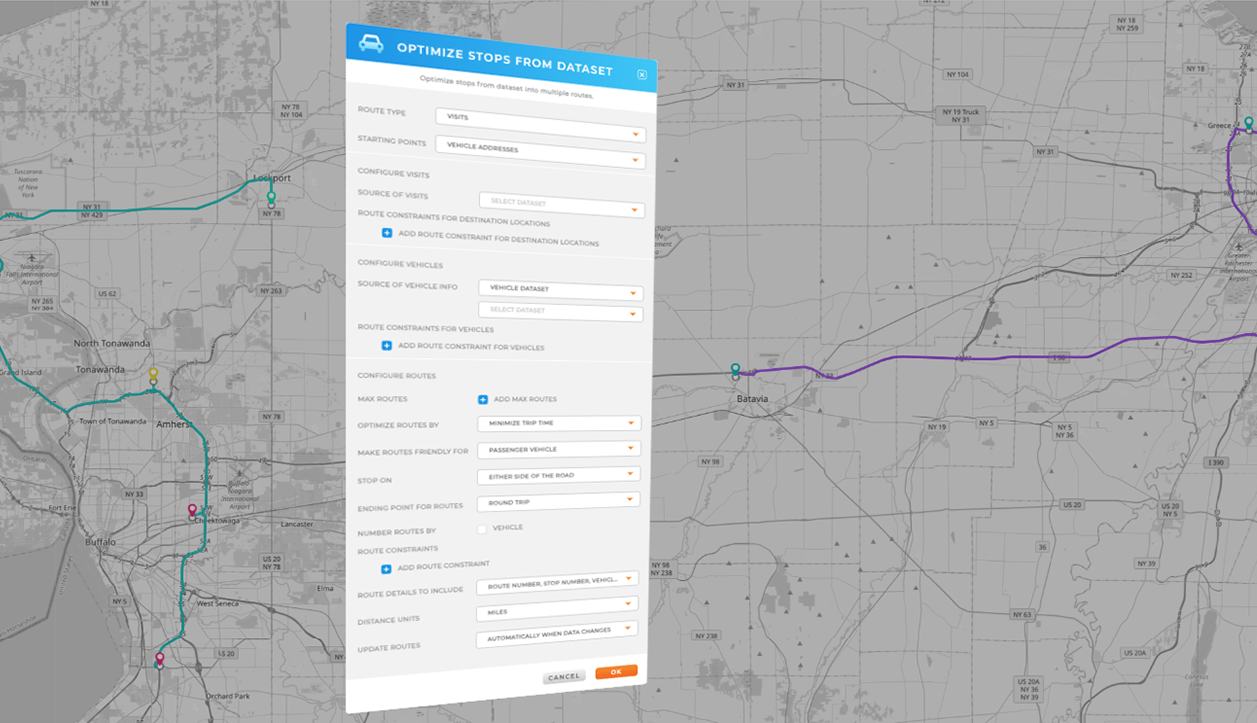
Users can import thousands of stops in seconds using Excel or connected data sources. Mapline organizes the data automatically and prepares it for optimization without requiring manual cleanup. This streamlines the planning workflow and eliminates the tedious setup work that slows down traditional routing processes. With bulk uploads, large datasets become manageable at any scale.

Visual Maps Highlight Opportunities and Conflicts
Mapline displays all stops visually, making it easy to identify geographic clusters, potential bottlenecks, or gaps in coverage. This enhances situational awareness and helps planners understand the overall distribution of work. Visual clarity supports better planning and allows teams to make smarter adjustments before routes are finalized. It provides insight that spreadsheets simply cannot match.

Smart Routing Delivers Reliable Daily Outcomes
Mapline uses routing algorithms and real-time logic to build optimized routes that reflect operational constraints. This ensures each plan is both efficient and achievable, reducing rework and improving on-time performance. With accurate sequencing and load balancing, teams complete more stops per day with fewer disruptions. Reliable routing leads to better customer experiences and stronger operational results.

