


For years, businesses have tracked the same performance metrics because they were easy to measure, widely accepted, or built into default dashboards. But as data volumes grow and operations become more complex, many of these metrics are no longer helping teams make better decisions. In fact, some are actively slowing them down.
In 2026, the most effective organizations will not be the ones tracking the most metrics, but the ones tracking the right metrics. That starts by identifying which metrics no longer reflect how modern teams operate and replacing them with insights that support smarter, faster decisions.
Why Some Metrics No Longer Serve Modern Teams
Many legacy metrics were designed for a time when data was scarce, reporting cycles were slow, and decisions were made at a high level. Today, teams work with real-time data, distributed operations, and location-dependent performance that changes day by day.
Metrics become a problem when they summarize performance so broadly that they hide variability, mask inefficiencies, or fail to point toward action. If a metric cannot help a team decide what to do next, it is no longer earning its place on a dashboard.
As organizations plan for 2026, it’s time to reevaluate which metrics actually support optimization and which simply reflect habit.
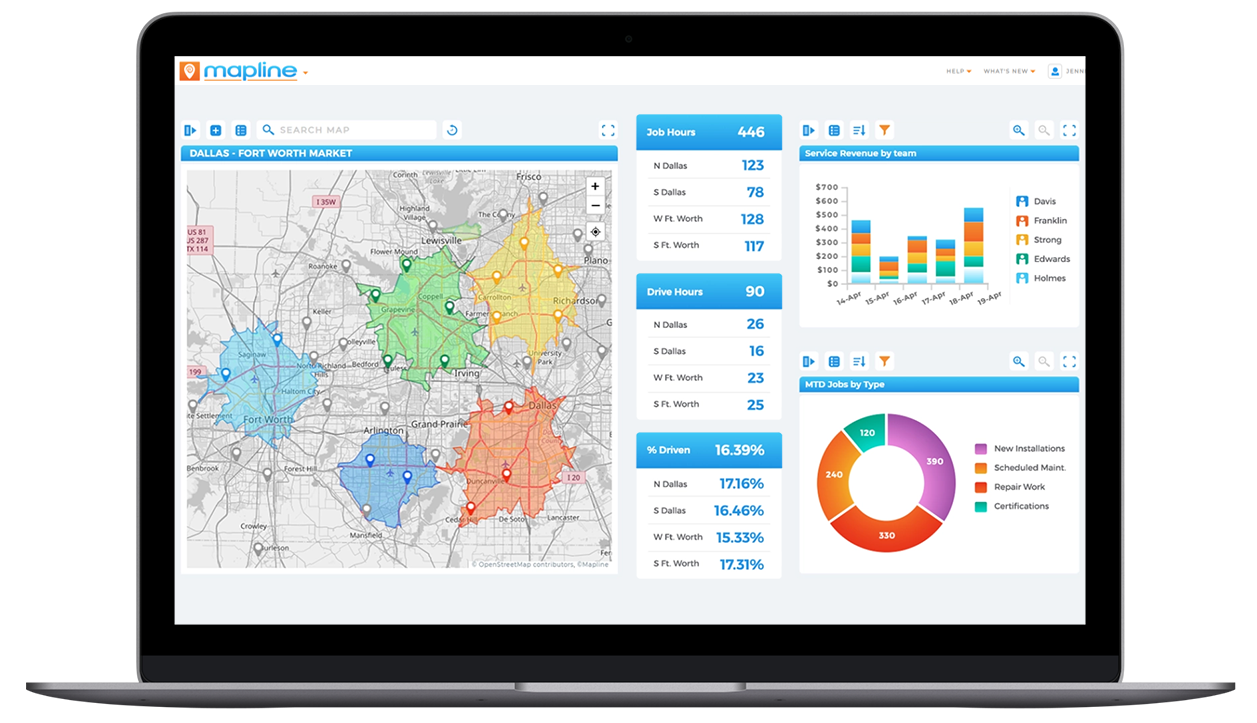

Pro Tip: If a metric doesn’t change behavior, it isn’t a metric — it’s noise. As teams plan for 2026, focus on metrics that directly influence decisions, resource allocation, or optimization. With location-based analytics, this means prioritizing spatial insights that reveal where performance changes, not just how much it changes.
Total Volume Metrics Without Context
Metrics such as total deliveries, total orders, total leads, or total revenue are still commonly tracked, but on their own, they provide limited insight. High totals can coexist with poor efficiency, uneven performance, or hidden bottlenecks.
Without geographic or operational context, total volume metrics fail to explain where performance is strong or why it is weak. Teams may see growth overall while missing regional inefficiencies, overloaded routes, or underperforming territories.
In 2026, volume metrics should be paired with location-based analysis that reveals distribution, concentration, and variability across regions.
Average-Based Performance Metrics
Averages are one of the most misleading metrics still in widespread use. Average delivery time, average response time, or average cost per stop often hide extreme variation within the data.
In real-world operations, performance is rarely uniform. Some routes, regions, or teams may perform exceptionally well while others struggle. Averages flatten these differences, making it difficult to identify where improvement is actually needed.
Modern analytics favors distributions, percentiles, and spatial comparisons over single average values. These approaches reveal outliers and patterns that averages conceal.
Static Route Efficiency Metrics
Traditional route efficiency metrics often assume that routes are fixed and conditions are stable. Metrics like planned versus actual distance or static cost-per-route fail to reflect real-world variability such as traffic, demand shifts, or service constraints.
As operations become more dynamic, route performance must be evaluated in context. Metrics that do not account for location, time windows, or changing inputs become less useful with each passing year.
In 2026, effective teams measure routing performance based on adaptability, consistency across regions, and real-world constraints rather than static benchmarks.
Vanity KPIs That Don’t Drive Action
Some metrics persist simply because they look good in reports. These vanity KPIs may show growth or improvement but do not change how teams operate.
Examples include high-level utilization rates, generic efficiency scores, or composite indexes that cannot be traced back to specific actions. When teams cannot explain how a metric influences decisions, it often becomes a reporting obligation rather than a decision-making tool.
Metrics should earn their place by clearly connecting to operational changes, resource allocation, or optimization strategies.
What to Track Instead in 2026
As outdated metrics are retired, they should be replaced with insights that reflect how modern teams actually operate. In 2026, the most valuable metrics are those that incorporate location, variability, and efficiency over time.
Examples include performance by region, service density by area, route efficiency relative to geography, and cost or time per stop normalized by distance or demand. These metrics help teams understand not just outcomes, but the underlying factors driving them.
Location-aware metrics enable more precise decisions, better forecasting, and more targeted optimization.
How Location Intelligence Changes the Metrics Conversation
Location intelligence adds context that traditional metrics lack. By mapping data and analyzing it spatially, teams can see patterns that are invisible in spreadsheets alone.
Metrics tied to geography help identify underserved areas, inefficient routes, overlapping territories, and regional demand shifts. This makes it easier to move from reporting to action. As analytics strategies evolve, location becomes a core dimension rather than an afterthought.
Building a Leaner, Smarter Metrics Stack
Tracking fewer metrics does not mean losing insight. It means focusing attention on metrics that reflect real-world performance and support continuous improvement.
In 2026, successful teams will regularly audit their metrics, remove those that no longer drive decisions, and invest in analytics that scale with their operations. This shift reduces noise, improves clarity, and accelerates decision-making.
Metrics should evolve as quickly as the businesses they support.
It refers to metrics that no longer provide meaningful insight or drive action. As analytics tools evolve, some legacy metrics remain popular simply because they are familiar, not because they are useful.
Outdated metrics can distort decision-making, encourage optimization toward the wrong goals, and consume reporting resources without delivering value. Over time, they slow teams down instead of helping them move faster.
Teams should evaluate whether a metric influences decisions, supports optimization, or reveals patterns that would otherwise be missed. If a metric does not lead to action, it may no longer be worth tracking.
High-level vanity metrics, averages without geographic context, and metrics that ignore variability across locations are increasingly insufficient. As data volumes grow, precision and context matter more than raw totals.
Modern analytics emphasizes performance by location, distribution patterns, efficiency ratios, and spatial trends over time. Metrics that incorporate geography help teams understand why results vary, not just that they vary.
Location data adds context that traditional metrics lack. By mapping performance geographically, teams can identify regional trends, inefficiencies, and opportunities that would be invisible in spreadsheet-only analysis.
Often, yes. As metrics become more complex and spatially driven, teams benefit from tools that integrate mapping, analytics, and automation rather than relying solely on static reports.
