


- Blog
- Geo Scheduling
- Stop Optimizing for Speed: What Sales Rep Route Planning Should Actually Optimize For
In routing in sales management, speed has become the default metric. Shortest distance. Fastest drive time. Most stops per day. But while minimizing miles feels productive, it doesn’t automatically translate to revenue growth. Sales rep route planning that focuses only on speed often ignores the bigger picture: opportunity density, account value, visit cadence, and territory balance.
Sales routes should not simply answer, “How fast can we get there?” They should answer, “Is this the most strategic use of field time?” When routing logic prioritizes efficiency alone, teams risk maximizing motion instead of results.
Why Speed Is an Incomplete Metric
Speed matters, but only in context. A rep who visits ten low-priority accounts quickly may appear efficient on paper, yet deliver less revenue impact than a rep who spends more time in a high-density, high-value zone. Sales route planning that ignores account tiering or territory opportunity creates a false sense of productivity.
Traditional sales routing tools often optimize for shortest path algorithms without considering strategic sequencing. That means high-value accounts may be scheduled later in the day, or visit frequency may not align with opportunity size. When speed becomes the sole optimization factor, revenue alignment suffers.
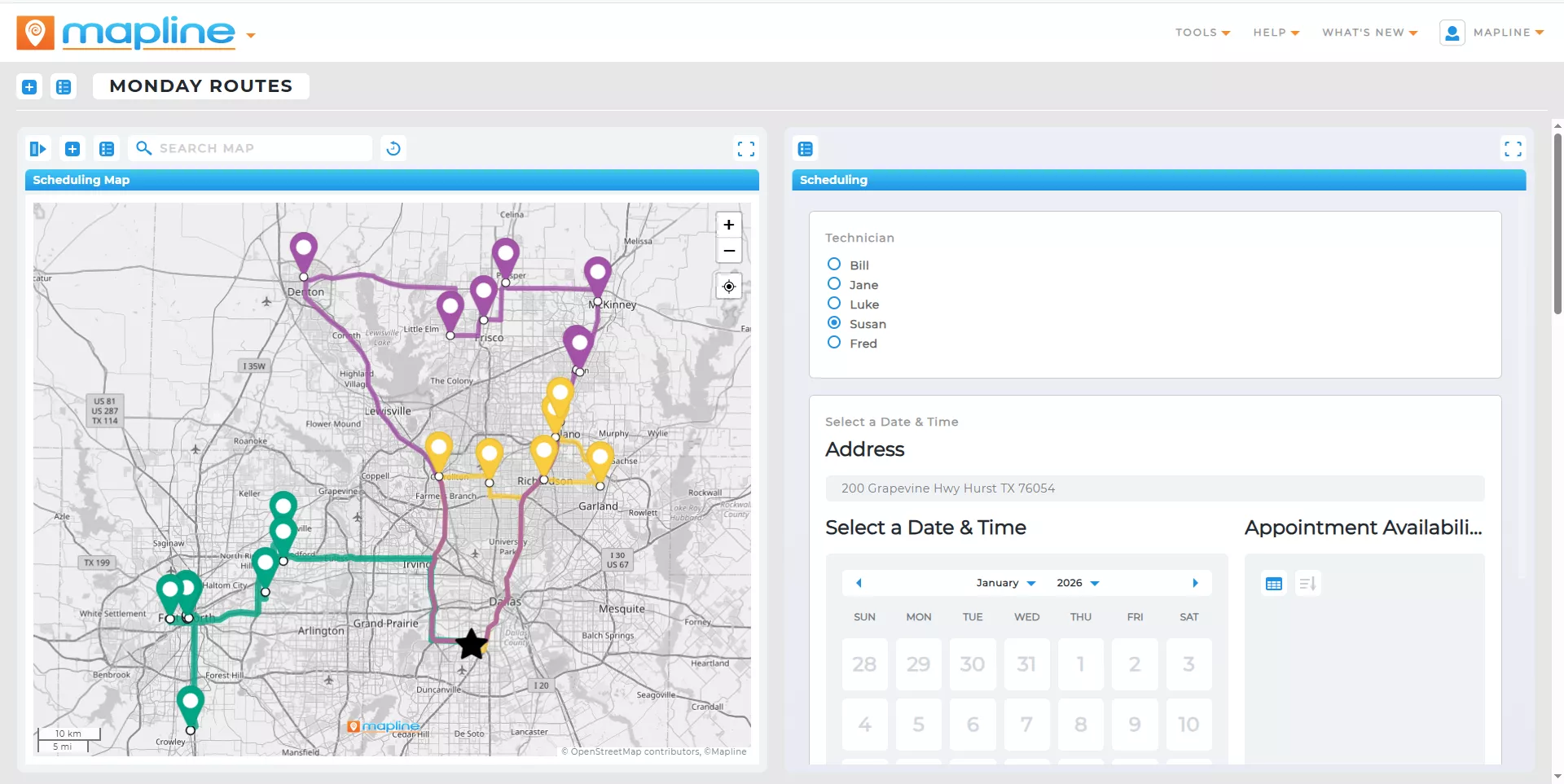
Pro Tip: Before generating sales routes, rank your accounts by value and map them visually. Identify high-density opportunity zones first, then build routes around those clusters. When routing in sales management starts with revenue geography, not just distance, your reps spend more time selling in the right places and less time driving between low-impact stops.
Optimize for Revenue Density, Not Distance
Instead of asking how to reduce drive time, ask how to increase revenue density per mile. Revenue density measures how much opportunity exists within a given geographic area. Clusters of high-value accounts should be prioritized, even if that slightly increases travel time compared to a perfectly linear route.
By mapping revenue concentration before generating routes, managers can design sales routes that maximize high-value interactions within realistic drive-time thresholds. This approach transforms sales routing from a navigation problem into a revenue allocation strategy.
Optimize for Visit Cadence and Relationship Impact
Not every account requires the same visit frequency. High-performing sales route planning considers visit cadence rules tied to account value, pipeline stage, or contract renewal timelines. A route that evenly distributes stops may look balanced, but it may fail to prioritize the accounts that truly drive growth.
When routing in sales management incorporates cadence logic, reps spend more time strengthening key relationships and less time servicing low-impact visits. This leads to stronger pipeline health and better long-term performance.

Optimize for Territory Balance
Another overlooked factor in sales routing is territory equity. If one rep’s sales routes consistently require longer drive times or cover geographically dispersed accounts, workload imbalance becomes inevitable. Over time, this leads to burnout, inconsistent performance, and uneven coverage.
Effective sales route planning aligns routing decisions with territory design. Geographic clustering, demographic overlays, and workload analysis ensure each rep operates within a balanced region. Tools that integrate routing with territory management, such as Geo Scheduling, allow teams to optimize routes while maintaining strategic territory structure.
Optimize for Flexibility and Adaptability
Markets change. Accounts are added. Territories evolve. Static routes optimized once per quarter quickly become outdated. Sales rep route planner free tools often lack dynamic refresh capabilities, forcing managers to manually rebuild routes whenever data changes.
Modern sales routing should adapt automatically as datasets update. When routes are connected directly to live data, changes in account value, geography, or staffing can trigger recalculations. This ensures your sales route planning remains aligned with current opportunity, not last quarter’s assumptions.
What Sales Rep Route Planning Should Actually Optimize For
True optimization in sales route planning balances multiple variables at once:
- Revenue density per mile
- Visit frequency alignment
- Territory workload balance
- Drive time efficiency
- Strategic account sequencing
When these factors work together, routing in sales management becomes a competitive advantage. Reps spend less time driving randomly and more time engaging with the right accounts in the right order.
Rethinking Sales Routes as Strategy
Sales routes are not just logistical pathways; they are strategic frameworks for deploying field effort. Every route represents a series of choices about where time, energy, and relationship-building will be invested. If your routing strategy only measures speed, you are optimizing for the wrong outcome.
Sales route planning should optimize for impact.
When geography, revenue, and territory design intersect, routing becomes a powerful lever for growth. Speed still matters, but it should support strategy, not replace it.
BUILD ROUTES THAT DRIVE RESULTS
Ready to move beyond basic sales routing and design routes that align with revenue strategy? Explore how integrated geo-scheduling tools can help you balance territory structure, visit cadence, and drive-time efficiency in one unified system.
Routing in sales management is the process of planning and optimizing field rep travel to maximize productivity and revenue impact. It involves sequencing stops, balancing territories, and aligning visit frequency with account value. Modern sales routing goes beyond shortest-path navigation by incorporating territory data, drive-time logic, and strategic account prioritization. When done correctly, routing supports both operational efficiency and revenue growth.
Basic navigation apps focus on getting from point A to point B in the shortest time. Sales route planning tools optimize multiple stops, account value, visit cadence, and territory balance at once. They consider business logic alongside geographic logic. This ensures sales routes align with growth strategy rather than simply minimizing miles.
Free tools can work for small teams with limited stops and simple routing needs. However, they often lack advanced features such as territory balancing, dynamic recalculation, workload analysis, and revenue-based prioritization. As datasets grow and routes become more complex, dedicated sales route planning software provides significantly more control and strategic value.
Sales route planning should optimize for a balance of revenue density, workload distribution, visit cadence, and drive-time efficiency. Focusing only on speed can create uneven territories and missed opportunities. The best routing strategies align field time with high-value accounts and geographic opportunity.
Sales routes should be reviewed whenever account data changes, territories are adjusted, new reps are added, or performance shifts occur. Many teams benefit from routing tools that automatically refresh as data updates. Dynamic routing ensures your sales routes reflect current opportunity rather than outdated assumptions.


