


Q4 always gets the attention. Budgets swell, urgency spikes, and every team feels the pressure to deliver results fast. But the truth most organizations learn too late is this: Q4 performance is rarely decided in Q4. It’s decided months earlier, by what you fixed—or failed to fix—in Q1.
Q1 isn’t just a recovery period after the holiday rush. It’s the only quarter where you still have time, clarity, and optionality. The decisions you make here quietly determine whether Q4 feels controlled and scalable, or chaotic and reactive. Teams that treat Q1 as a strategic repair window don’t just perform better later in the year—they experience less friction, fewer fire drills, and far more predictable growth.
Why Q1 Quietly Determines How Painful Q4 Will Be
Most teams enter Q1 carrying unresolved issues from the previous year. Territories that no longer reflect reality. Processes that only work when the volume is low. Data that’s fragmented across tools. These issues don’t disappear on their own—they compound.
Q4 amplifies everything. If your systems are brittle, Q4 exposes them. If your workflows are manual, Q4 overwhelms them. And if your teams don’t have clarity around priorities, ownership, or coverage, Q4 becomes a game of damage control instead of execution.
Q1 is the only quarter where you can slow down enough to fix structural problems before they become revenue problems.
Pro Tip: If Q4 feels chaotic every year, the issue isn’t effort—it’s structure. The fastest way to improve end-of-year performance is to fix coverage, visibility, and adaptability in Q1, while you still have time to do it right.
Fix #1: Your Coverage Model (Before Growth Exposes the Cracks)
Coverage issues are rarely obvious early in the year. In Q1, most teams have manageable volumes and enough slack to compensate manually. By Q4, those same gaps turn into missed opportunities, overloaded reps, and uneven performance.
This is the quarter to answer hard questions: Where do we consistently under-serve? Where are we duplicating effort? Which regions or segments rely on tribal knowledge instead of clear ownership?
High-performing teams use Q1 to redesign coverage intentionally. They align territories, regions, or service areas with actual demand—not historical assumptions. This prevents the last-minute reshuffling that destroys momentum later in the year.
Fix #2: Your Data Foundation (Because You Can’t Optimize What You Can’t See)
In Q4, teams make decisions fast. If your data isn’t unified, clean, and accessible, speed becomes guesswork. Leaders end up relying on lagging indicators or partial views of performance, which leads to conservative decisions and missed upside.
Q1 is when teams audit their data reality: What data actually drives decisions? Where is data duplicated, outdated, or siloed? Which metrics matter operationally, not just cosmetically?
This isn’t about adding more dashboards. It’s about ensuring the right data is visible, trusted, and connected—so when Q4 pressure hits, teams can act confidently instead of debating numbers.
Fix #3: Your Execution Bottlenecks (Especially Time and Capacity)
Every organization has hidden friction that quietly drains performance. Excess drive time. Manual planning. Redundant approvals. Unclear handoffs. In Q1, these inefficiencies are survivable. In Q4, they’re fatal.
This is the moment to identify where time is being wasted instead of converted into results. High-performing teams analyze how work actually flows—not how it’s supposed to flow—and remove bottlenecks while volumes are still reasonable.
Teams that do this early don’t just move faster later. They protect selling time, reduce burnout, and create capacity without hiring.
Fix #4: Your Planning Rhythm (Static Plans Don’t Survive Q4)
Many teams still plan as if the year unfolds linearly. By Q4, those plans are obsolete. Markets shift, demand spikes unevenly, and assumptions made months earlier no longer hold.
Q1 is when strong teams move from static planning to adaptive planning. They build systems that can respond to change instead of resisting it. They stop treating planning as an annual event and start treating it as a continuous process.
This shift is subtle but powerful. It’s the difference between scrambling to react in Q4 and calmly reallocating resources as conditions change.
Fix #5: Your Team Alignment (Before Pressure Creates Friction)
Misalignment rarely shows up when things are slow. It shows up when the stakes are high. Q4 magnifies every unclear responsibility, every conflicting priority, and every ambiguous handoff.
Q1 is when leaders reset expectations: What does success actually look like? Who owns what decisions? How do teams escalate issues without slowing execution?
High-performing teams use Q1 to eliminate ambiguity while there’s still room for conversation. By Q4, alignment isn’t debated—it’s assumed.
Fix #6: Your Measurement Strategy (From Reporting to Optimization)
If your metrics only tell you what happened, Q4 will always feel reactive. Teams that struggle late in the year often measure outcomes instead of drivers.
Q1 is when teams redefine what they track and why. They shift focus toward leading indicators—capacity utilization, coverage balance, response times, and workflow health. This allows them to correct course early instead of explaining misses later.
When Q4 arrives, these teams aren’t surprised by performance. They’ve been watching it build all year.
Fix #7: Your Ability to Adapt in Real Time
The biggest difference between teams that thrive in Q4 and those that survive it is adaptability. Q4 rarely goes according to plan. The question is whether your systems bend or break when that happens.
Q1 is when teams invest in flexibility. They reduce manual dependencies, centralize decision-making data, and ensure changes can be made without starting from scratch. This makes Q4 feel dynamic instead of dangerous.
Why Fixing These in Q1 Changes Everything About Q4
When these foundations are solid, Q4 stops being a stress test and starts being an execution phase. Leaders spend less time firefighting and more time scaling what works. Teams move faster without cutting corners. Decisions feel easier because the system supports them.
Most importantly, success becomes repeatable. You’re not relying on heroics or overtime. You’re relying on structure.
How High-Performing Teams Use Q1 Differently
They don’t chase immediate wins at the expense of stability. They prioritize fixing systems over pushing volume. They invest in clarity, visibility, and adaptability early. They treat Q1 as the quarter that makes every other quarter easier.
By the time Q4 arrives, these teams aren’t bracing for impact. They’re ready to capitalize.
How to Apply Each Q1 Fix Using Mapline
1. Fix Your Coverage Model
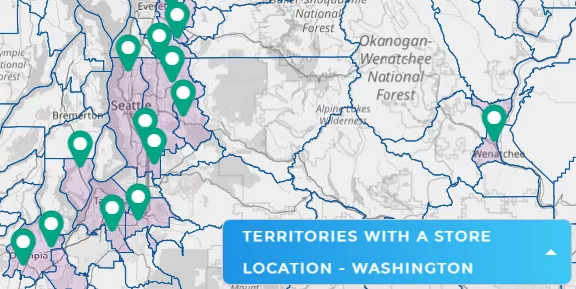
Use Mapline to visualize all customers, leads, and accounts on a single map, then build or adjust territories based on real geographic demand. You can layer performance data, workload indicators, or service frequency on top of regions to quickly spot overlap, gaps, or imbalance before they become Q4 problems.
2. Fix Your Data Foundation
Centralize spreadsheets, CRM data, and operational datasets in Mapline so teams are working from one source of truth. Maps, charts, and dashboards stay connected to the same live data, reducing disputes over numbers and ensuring leaders see the same reality when making decisions.
3. Fix Execution Bottlenecks
Identify where time and effort are being wasted by visualizing routes, travel distance, and territory workloads. Mapline highlights inefficiencies—like excessive drive time or overloaded regions—so you can rebalance work early and protect capacity as volumes increase later in the year.
4. Fix Your Planning Rhythm
Replace static annual plans with dynamic maps and dashboards that update as data changes. Mapline allows teams to adjust territories, routes, and priorities without starting over, making it easier to adapt plans as market conditions shift throughout the year.
5. Fix Team Alignment
Share maps, views, and dashboards with role-based access so everyone sees what’s relevant to them—and nothing they don’t need. This creates clarity around ownership, reduces back-and-forth, and keeps teams aligned as pressure ramps up in Q4.
6. Fix Your Measurement Strategy
Move beyond static reports by tracking leading indicators geographically. Mapline’s territory reports, filters, and dashboards help teams monitor coverage health, capacity utilization, and regional performance early—so corrective action happens months before Q4.
7. Fix Your Ability to Adapt in Real Time
As data updates, Mapline automatically reflects changes across maps, territories, and reports. This allows teams to respond to demand spikes, coverage shifts, or operational disruptions instantly, instead of reacting after the damage is done.
The Real Opportunity of Q1
Q1 doesn’t look impressive on a revenue chart. That’s why it’s undervalued. But it’s the only quarter where you can fix problems before they cost you money, morale, or momentum.
If you want Q4 to feel easier, calmer, and more profitable, the work starts now. Not with bigger goals or louder campaigns—but with smarter foundations.


